
Most skincare problems are not caused by missing the right product. They come from the wrong order, too many actives at once, or skipping a basic step because of a myth. This guide puts the core questions in one place: why skin turns reactive, which order to apply things in, what serums and masks can and can’t do, whether retinol is worth starting after 35, and why oily skin still needs moisturiser.
Why so many people now say their skin is “sensitive”
Ask a group of friends whether they have sensitive skin and at least half will say yes. Surveys in Europe, the US and Asia report much the same: more than half of women, and a large share of men, describe their skin as sensitive to some degree.
Dermatologists draw a useful line here. Some people are born with reactive skin. Many more have sensitised skin, which has become reactive because of what is being put on it. Ten years ago a typical routine was cleanser, moisturiser and sunscreen. Today it can include double cleansing, toner, essence, vitamin C, niacinamide, hyaluronic acid, retinol, an exfoliating acid and a repair cream. Each product may be reasonable. Together they can overwhelm the skin barrier.
Signs your routine is doing too much
- Products that used to feel fine now sting or burn
- Tightness straight after cleansing
- Patchy redness, flaking or a shiny, “tight” look on the cheeks
- Small bumps or breakouts that appear soon after adding something new
How to calm sensitised skin
- Strip the routine back to a gentle cleanser, a plain moisturiser and sunscreen for two to four weeks.
- Pause exfoliating acids and retinoids until the stinging and redness settle.
- Bring products back one at a time, with at least a week or two between each, so you can see what your skin tolerates.
- Patch test anything new on the side of the neck or behind the ear for a few days first.
- Stop chasing quick results. Switching products every two weeks makes it hard to know what is working, and often what is irritating.
This “less, but better” approach is sometimes called skinimalism. It is not a step backwards. It is what a well-informed routine looks like once the basics are covered.

The right order of skincare steps
The general rule is simple: apply products from the thinnest texture to the thickest, and finish with sunscreen in the morning. Water-light formulas go on first so they are not blocked by richer creams.

Morning routine
- Cleanse. A gentle cleanser or simply lukewarm water if your skin is dry or reactive.
- Toner (optional). Choose an alcohol-free, fragrance-free one. A hydrating toner is a nice extra, not a requirement.
- Serum. An antioxidant such as vitamin C, or a hydrating serum.
- Moisturiser. Lighter for oily skin, richer for dry skin.
- Sunscreen. Broad spectrum, SPF 30 or higher. Reapply roughly every two hours when you are outdoors, and after swimming or sweating.
Evening routine
- Remove sunscreen and makeup. A cleansing oil or balm dissolves both. Follow with a regular cleanser if you wear heavy or water-resistant products.
- Cleanse. Use lukewarm water rather than hot.
- Treatment. This is the step for a retinoid or an exfoliating acid. Use one per night, not both together.
- Eye cream (optional). Tap a small amount around the orbital bone with your ring finger.
- Moisturiser. Seals in water and supports the barrier overnight.
Weekly extras
- Exfoliation: one or two times a week is plenty for most skin types. Skip it on retinoid nights.
- Masks: one to three times a week, depending on the type and how your skin responds.
Korean routines are famous for eight or ten steps (essence, ampoule, serum and more). They can work for skin that tolerates them, but they are not a requirement. If you only have time for three steps, make them cleanse, moisturise and sunscreen in the morning, and cleanse, treat and moisturise at night.
Serums: what they do and how to choose one
A serum is a lightweight product designed to deliver a higher concentration of active ingredients than a typical moisturiser. It doesn’t replace moisturiser. It sits underneath it and handles a specific concern.
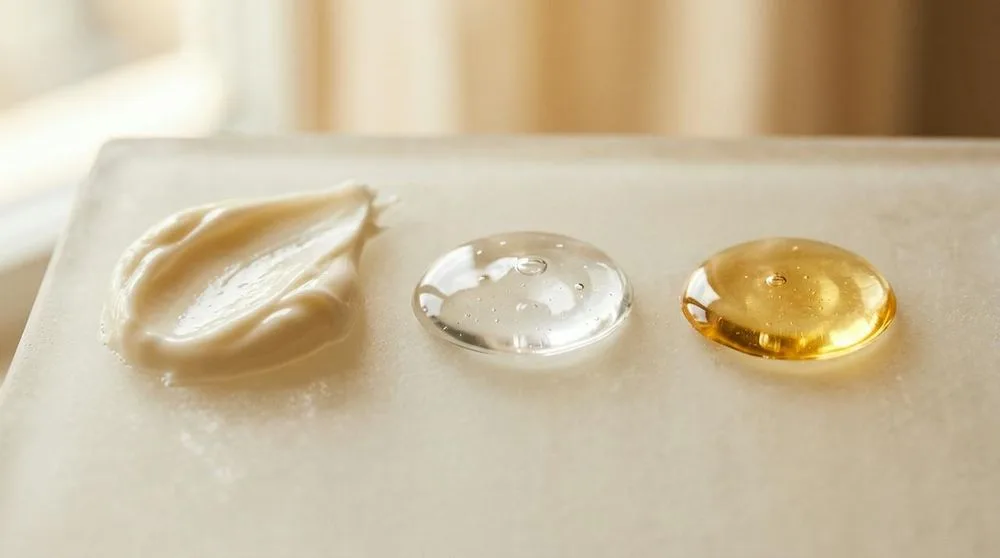
Match the serum to your main concern
- Dehydration and tightness: hyaluronic acid, glycerin and panthenol (vitamin B5) attract and hold water.
- Oil and breakouts: niacinamide helps balance oil and calm redness; salicylic acid (BHA) clears inside pores.
- Dull tone and dark marks: vitamin C, niacinamide, tranexamic acid, azelaic acid and alpha arbutin target uneven pigment.
- Fine lines and texture: retinoids have the strongest evidence; peptides are a gentler option.
- Redness and a weak barrier: ceramides, centella asiatica, panthenol and oat-based formulas.
How to apply a serum
- Apply to clean skin, ideally while it is still slightly damp.
- Two or three drops are usually enough for the face. Press into the skin rather than rubbing hard.
- Carry any extra down to the neck.
- Follow with moisturiser straight away to lock it in.
One or two well-chosen serums are enough for most people. Layering four actives at once is a common route to sensitised skin.
Face masks: a useful extra, not a fix
Masks have a long history. Clay, honey, oils and egg have been used on skin for centuries. Today’s formats are more varied, and each suits a different job.

Types of mask and who they suit
- Sheet masks: a fabric, hydrogel or bio-cellulose sheet soaked in serum. Quick hydration for most skin types.
- Cream masks: rich and cushioning. Best for dry or dehydrated skin.
- Gel masks: cooling and light. Good for oily or warm, flushed skin.
- Clay and mud masks: absorb excess oil. Best for oily areas, used once or twice a week.
- Peel-off masks: lift surface debris, but can sting and tug. Not ideal for sensitive skin.
What about “anti-aging” masks?
A hydrating mask can make skin look plumper and smoother for a day or two, because well-hydrated skin reflects light better and fine dryness lines soften. That effect is real but temporary. Long-term changes to lines and firmness come from daily sunscreen and consistent use of proven actives such as retinoids. Think of an anti-aging mask as a top-up, not the main treatment.
How to use a mask well
- Cleanse first. Exfoliate gently beforehand only if your skin tolerates it.
- Leave sheet and cream masks on for 10 to 20 minutes, or as the pack directs.
- Remove a sheet mask before it dries out, or it can start drawing moisture back out of the skin.
- Pat in leftover essence, then apply moisturiser.
- Keeping a sheet or gel mask in the fridge for a few minutes before use adds a cooling, soothing effect.
A note on DIY recipes: kitchen ingredients such as lemon juice can irritate and make skin more sensitive to sunlight. If you try a homemade mask, keep it simple (plain yoghurt or honey are gentle starting points) and patch test first.
Retinol after 35: useful, but not mandatory
Retinol is a form of vitamin A. Unlike a moisturiser, which mainly adds water and supports the barrier, a retinoid changes how skin cells behave. It speeds up cell turnover and supports collagen production. Retinoids are among the most studied topical ingredients for fine lines, rough texture and uneven tone.

That does not mean everyone over 35 needs it. The biggest drivers of visible skin ageing are sun exposure, smoking, poor sleep and pollution. A person who wears sunscreen every day for ten years will often see more benefit than one who uses a strong retinol but skips sun protection.
Who is likely to benefit
- People with fine lines, rough texture or uneven tone they want to improve
- Those with acne or clogged pores (retinoids help here at any age)
- Anyone who already has a stable routine and wears sunscreen daily
How to start without wrecking your skin barrier
- Use a pea-sized amount for the whole face, at night only.
- Start two or three nights a week, then increase slowly over several weeks as your skin adjusts.
- Buffer it if you are prone to irritation: apply moisturiser first, or sandwich the retinol between two thin layers of moisturiser.
- Expect an adjustment period. Dryness, flaking, mild redness and tightness in the first weeks are common. Peeling is not a sign that it is working better.
- Don’t combine it with exfoliating acids on the same night.
- Wear sunscreen every morning. Skin is more vulnerable to UV during this phase.
- Avoid retinoids if you are pregnant, trying to conceive or breastfeeding, and check with your doctor.
Retinol does not cause melasma. The real risk for medium and deeper skin tones is post-inflammatory hyperpigmentation, dark marks left behind by irritation. Going slowly and protecting skin from the sun prevents most of this.
Does oily skin need moisturiser? Yes
It is one of the most persistent skincare myths. Oil and water are not the same thing. Sebum is oil; hydration is water held in the skin. Oily skin can be dehydrated underneath, especially if it is washed with harsh, stripping cleansers or treated with too many drying products. Some people find their skin then looks oilier, not less.

How to moisturise oily skin
- Choose the right texture: gels, gel-creams and light lotions rather than thick creams.
- Look for “non-comedogenic” or “oil-free” on the label.
- Pick water-binding ingredients: hyaluronic acid, glycerin and aloe vera.
- Add barrier support: niacinamide and ceramides help skin hold water and can calm redness.
- Apply once or twice a day after cleansing. More is not better.
A simple routine for oily or acne-prone skin
- A gentle, alcohol-free cleanser. Salicylic acid can help if you have clogged pores.
- A toner or serum with niacinamide or salicylic acid.
- A lightweight, oil-free moisturiser.
- Daily oil-free sunscreen, SPF 30 or higher.
- A clay mask once or twice a week on oily areas.
Blotting papers are handy during the day. Use them sparingly; constant blotting and washing can tip skin into dryness. Stubborn or painful acne is worth a visit to a dermatologist, who can prescribe stronger treatments where appropriate.
Three sample routines
For sensitised or reactive skin
- Morning: gentle cleanser or water, barrier-repair moisturiser, mineral or gentle sunscreen.
- Evening: gentle cleanser, the same moisturiser.
- Add later: one soothing serum (ceramides, panthenol or centella) once skin is calm.
For oily skin
- Morning: gentle cleanser, niacinamide serum, gel moisturiser, oil-free sunscreen.
- Evening: cleanser, salicylic acid on two or three nights, gel moisturiser.
- Weekly: clay mask once or twice.
For skin over 35 with lines and dullness
- Morning: cleanser, vitamin C serum, moisturiser, SPF 30+ sunscreen.
- Evening: cleanser, retinoid on two or three nights (building up slowly), richer moisturiser.
- Weekly: a hydrating sheet or cream mask when skin feels tight.
When to see a dermatologist
Book an appointment if stinging or redness lasts more than a few weeks after simplifying your routine, if acne leaves scars or dark marks, if patches of pigment are spreading, or if you are unsure whether a prescription treatment would suit you. A professional can tell the difference between sensitised skin and conditions such as rosacea or eczema, which need specific care.
The takeaway
Good skin care is less about the number of steps and more about choosing the right few and using them consistently. Cleanse gently, moisturise for your skin type, wear sunscreen every day, and add one active at a time. Give each change several weeks before you judge it. Your skin will usually tell you what it needs if the routine is quiet enough to hear it.
This article is for general information and is not medical advice. If you have a skin condition, are pregnant or are taking medication, speak to a dermatologist or doctor before starting new active ingredients. Written with reference to beauty knowledge articles published by Beauty Review (beautyreview.co).