Anti-aging masks promise firmer, smoother, brighter skin in twenty minutes. Some of that is real, and some of it is packaging. This guide explains what an anti-aging mask can do, which ingredients are worth looking for, the main types of mask, and how to fit one into a routine so it supports your skin rather than replacing the basics.
What an anti-aging mask actually does
An anti-aging mask is a concentrated treatment that stays on the skin for a set time, usually 10 to 20 minutes, or overnight for sleeping masks. Most work in one of three ways:
- Hydrating and plumping. Water-binding ingredients fill the skin with moisture, which softens fine dryness lines and makes skin look smoother and more radiant.
- Brightening. Antioxidants and gentle exfoliants help even out dullness and uneven tone.
- Supporting the barrier. Lipids, ceramides and soothing extracts help skin hold on to water and recover from dryness or irritation.
Setting realistic expectations
The glow after a good mask is real, but it is mostly temporary. Well-hydrated skin reflects light better and fine lines look softer for a day or two. Deeper changes to wrinkles, firmness and sun spots come from what you do every day: wearing sunscreen, using proven actives such as retinoids or vitamin C consistently, sleeping enough and not smoking. Think of a mask as a regular top-up, not the main treatment.
Ingredients worth looking for
- Hyaluronic acid and glycerin: draw water into the skin for an instant plumping effect.
- Ceramides and fatty acids: reinforce the barrier so skin stays hydrated longer.
- Peptides: small proteins that support firmness; a gentle option for sensitive skin.
- Niacinamide: improves tone, redness and barrier strength.
- Vitamin C: an antioxidant that helps with dullness and uneven tone.
- Vitamin E and plant oils: soften and nourish dry skin.
- Soothing extracts: centella asiatica, green tea, aloe vera and oat calm redness.
- Collagen: a good humectant on the surface of the skin. Applied topically, it hydrates; it does not replace the collagen your skin loses with age.
Types of anti-aging mask
Sheet masks
A fabric, hydrogel or bio-cellulose sheet soaked in serum. They are easy to use, mess-free and good for a quick hydration boost before an event. Hydrogel and bio-cellulose sheets cling more closely to the face than cotton.
Cream masks
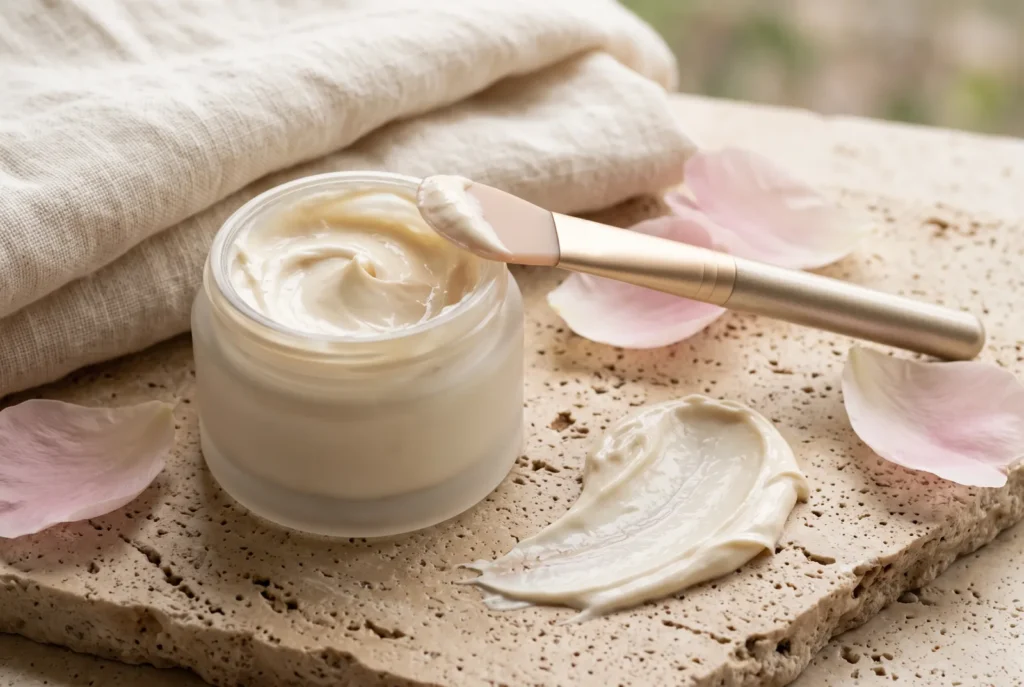
Rich, cushioning formulas that suit dry, dehydrated and mature skin. Apply a thick layer, leave it on, then tissue off the excess or rinse.
Gel masks
Cooling and lightweight. A good choice for combination or oily skin that still wants hydration, and for puffy morning skin.
Overnight or sleeping masks
A final layer that seals in your evening routine. They work while you sleep and are rinsed off in the morning, which makes them the most practical option if you are short on time.
Lifting and firming masks
Often full-face sheets or gel masks with peptides or caffeine. They can make skin look tighter for a few hours, which is useful before an event, but the effect is temporary.
How to use an anti-aging mask
- Cleanse first. Masks work best on clean skin. Exfoliate gently beforehand only if your skin tolerates it.
- Apply evenly. For sheet masks, smooth the fabric from the centre outwards so it sits flat. For cream and gel masks, use clean fingers or a spatula.
- Time it. Most wash-off and sheet masks need 10 to 20 minutes. Follow the pack.
- Don’t let a sheet mask dry out. Remove it while it is still damp.
- Finish properly. Pat in any leftover serum, then apply moisturiser to seal in hydration. If the mask is used in the morning, follow with sunscreen.
How often?
For most people, one to three times a week is enough. Hydrating sheet and cream masks can be used more often if your skin likes them. Masks containing exfoliating acids should stay at once or twice a week, and never on the same night as a retinoid.
Do DIY anti-aging masks work?
Kitchen ingredients such as honey, yoghurt, banana and oats can make pleasant, gentle masks. Honey is a natural humectant, yoghurt is mild and soothing, and oats calm irritation. They will hydrate and soften, but they don’t have the targeted actives of a well-formulated product.
Some popular recipes are best avoided:
- Lemon juice: very acidic and can make skin more sensitive to sunlight, raising the risk of irritation and dark marks.
- Raw egg: carries a risk of bacteria and adds little benefit.
- Undiluted spices such as turmeric or cinnamon: can stain or irritate.
Whatever you use, patch test on the inside of your arm or behind the ear first, and stop if you notice stinging or redness.
Choosing the right mask for your skin
- Dry or mature skin: cream or overnight masks with ceramides, hyaluronic acid and oils.
- Oily or combination skin: gel masks or light sheet masks with niacinamide or green tea.
- Sensitive skin: short ingredient lists with centella, oat or panthenol; avoid fragrance and strong acids.
- Dull, uneven tone: masks with vitamin C or niacinamide, used alongside daily sunscreen.
The takeaway
Anti-aging masks are a pleasant, useful extra. They give skin a reliable hydration boost and a temporary glow, and the right one can support a weakened barrier. Lasting results still depend on the daily basics: gentle cleansing, a good moisturiser, a proven active ingredient and sunscreen every morning.
This article is for general information and is not medical advice. If you have a skin condition or sensitive skin, speak to a dermatologist before trying new products. Written with reference to a beauty knowledge article published by Beauty Review (beautyreview.co).